
Conversion tracking, SEO & AI search
Guides on turning organic and AI search traffic into a real, measurable dollar value.

US State Privacy Laws: Every State, Dates, Rules and Thresholds
Every comprehensive US state privacy law with its effective date, who it covers and what it requires, plus a worked threshold check and what the laws change for ad pixels and conversion tracking.
SEO Revenue: How to Measure, Attribute and Grow It
How to calculate the revenue organic search produces, split a change into impressions, CTR, conversion rate and order value, and fix the reports that get it wrong.

SEO KPI Dashboard: What to Track, How to Build It, How to Read It
Which KPIs belong on an SEO dashboard, where each number comes from, how to set targets, and how to read it top down when something drops.

SEO Dashboard Template: 6 Panels, Free to Copy, With Revenue
Copy a six-panel SEO dashboard that shows conversions and value by landing page, not just traffic, with a filled-in example and the reasons Search Console and GA4 never match.
Referral Spam: How to Spot It and Stop It in GA4
How to recognize referral spam, prove whether it is ghost or crawler spam, stop it with the GA4 settings that work today, and see what it does to your conversion rates.
Plausible Alternative: Pick by the Limit You Hit, With 2026 Prices
Fathom, Simple Analytics, Umami, Matomo, PostHog and more, sorted by why you are leaving Plausible, with prices checked on vendor pages and the revenue attribution gap explained.
Dark Traffic: What It Is, Where It Hides and How to Measure It
Shared links, apps and AI assistants send visits that arrive with no source and get filed as Direct. Here is how to fix the leaks, estimate the rest and value it.
Conversion Tracking Tools: Types, Free Options and How to Test Them
Which tools actually count your leads, sales and calls, how they differ from CRO tools, and how to check one against your own backend before you trust it.
Conversion Tracking Pixel: How It Works, Code Examples and Fixes
What a conversion pixel sends, Meta and Google Ads code examples, how to stop double counting with a conversions API, and what pixels never see.
Conversion Tracking Code: Google Ads, Meta Pixel and GA4 Snippets
The exact base code and event code for Google Ads, Meta and GA4, where to paste them, how to send a real value and order ID, and how to prove they fire.
Conversion Goals: Examples, Platform Setup and Realistic Targets
What conversion goals are, how Google Ads, Microsoft Advertising and GA4 handle them, which to make primary, and how to set a realistic target with real arithmetic.

Content Decay: How to Spot It, Price It and Fix the Pages That Pay
How to confirm a traffic drop is content decay, read the Search Console pattern behind it, and refresh the pages that lost the most revenue first.
Carrd Analytics: Native Views, GA4 Setup and Form Tracking
What Carrd's new native analytics counts, which plan unlocks providers and events, how to track signups on a one-page site, and how to value each traffic source.
Assisted Conversions: How They're Counted and Where They Are in GA4
What assisted conversions are, how to count them and read the assisted/last click ratio, and how to get them from GA4, Google Ads or BigQuery.
AI Search Traffic: How AI Answers Change Your Visits and Revenue
AI answers cut clicks from Google while ChatGPT and other assistants send a new, smaller stream of visits. Here is where both show up in your reports and how to tell if you lost money.
AI Search Statistics 2026: Users, Clicks, Traffic and Conversions
ChatGPT has 900 million weekly users and AI Mode passed 1 billion monthly, yet Google keeps 89.94% of search. Every number here links to its original study, with what it means for your traffic.
Self-Hosted Analytics: Tools, Server Costs, Setup and What Breaks
Running analytics on your own server gives you the data and a fixed bill, and makes you the operator. Here is which tool to pick, what it needs, what it really costs and why self-hosted numbers go wrong.
PostHog vs Plausible: Features, Real Costs and Which to Pick
Plausible counts visits, sources and goals without cookies. PostHog follows users through your product. Here is how they compare on cost, cookie banners, self-hosting and data retention, checked against the vendors' own docs.
Organic Revenue: Meaning, Formula and a Worked Example
Organic revenue strips acquisitions, divestitures and currency out of reported revenue to show whether the existing business is growing. Formula, worked example and the marketing meaning.
Not Provided Keywords: What They Mean and How to Recover the Data
Why Google hides organic keywords, every place you can still get query data, and a worked example that turns Search Console queries into value per keyword.
Lightweight Analytics: 11 Scripts Measured and How to Choose
We measured 11 analytics scripts on the same day, from Plausible and Umami to GA4. Here is what makes a tool light, which one fits your site, and what a small script still cannot tell you.

Lead Value Calculator: What a Lead Is Worth and What to Pay
Enter your close rates, deal value and margin to see what a lead is worth, what a qualified lead is worth and your break-even cost per lead.
IP Anonymization: How It Works, GA4 Behavior and Log Setup
What IP anonymization does to an address, why GA4 needs no setting, how to anonymize your own logs, and what it changes in analytics and conversion data.

Gemini SEO: How to Get Cited by Gemini and Measure It
How the Gemini app, AI Overviews and AI Mode pick sources, the controls that decide where you appear, and how to measure Gemini traffic in conversions and revenue.
GA4 Data Retention: Options, Limits and How to Keep Data Longer
What GA4's retention setting actually deletes, why key events follow user retention, the limits that override it, and how to keep conversion history past 14 months.
Ecommerce Conversion Rate Benchmarks: Industry, Funnel and Shopify
Current ecommerce conversion rate benchmarks with sources: Shopify percentiles, industry, device, add-to-cart and checkout, plus why revenue per session is the fairer comparison.
Cookie Banner Requirements: EU Opt-In, US Opt-Out, and How to Test
What a cookie banner must do in the EU, UK and US, where popular guides get the CCPA wrong, and how a compliant banner changes your conversion reports.
Content Pruning: What to Cut, Merge or Keep (With a Template)
How to decide which pages to keep, update, merge, noindex or remove, with a copyable template, a worked example and the technical mistakes that undo a prune.
Content Attribution: Models, GA4 Limits and a Per-Page Example
Most tools credit channels, not articles. Here is how to give each piece of content its share of conversions and revenue, with a worked example under four models.
ChatGPT User Agent: Strings, IPs, Allow, Block and Verify
ChatGPT-User is the agent ChatGPT uses to open pages for its users. Here are the exact strings, how it differs from GPTBot and OAI-SearchBot, how agent mode signs its requests, and how to verify and measure it.
What Is Conversion Tracking? How It Works, Setup and Examples
How conversion tracking works in Google Ads, Meta and GA4, how to set it up and test it, why platform numbers never agree, and how to track organic and AI conversions.
Shopify Blog SEO: Rank Your Posts and Measure What They Sell
How to make Shopify blog posts rank and send readers to your products, with the platform details most guides skip and a method to measure revenue per post.
SEO Experiment: How to Test Changes and Prove What Works
How to run an SEO experiment with a control group, measure the lift with real arithmetic, stay within Google's testing rules and judge the result on conversions, not just clicks.
PerplexityBot: User Agents, IPs, robots.txt Rules and Log Checks
What PerplexityBot and Perplexity-User do, how to allow, block or verify them, the robots.txt mistake that opens private paths, and how to tell if access pays off.
Offline Conversion Tracking: Setup, Upload Windows and an Example
How to send closed deals, calls and store sales back to Google Ads, Meta, Microsoft and GA4, value each stage, and cover organic and AI leads with no click ID.
New vs Returning Visitors: GA4 Definitions, Ratios and Real Value
How GA4 decides who is new, why new and returning users never add up, why Safari inflates new visitors, and a worked example that turns the split into conversions and value.
Netlify Analytics: What It Counts, What It Costs, What It Misses
What Netlify's server-side Web Analytics shows, what it costs on credit-based and legacy plans, why it never matches GA4, and how to get from visits to conversions.
Local SEO Tracking: Rankings, Profile Actions and Lead Value
Track local SEO from map rankings to revenue: what to measure at each layer, the profile tag most businesses miss, Google's new GA4 link and a worked example.
Lead Attribution: Models, Setup Fields and a Lead Value Example
How to capture first and latest touch on every lead, which model to use, and how to turn lead sources into qualified leads, revenue and value per lead.
Landing Page Optimization for SEO: Rank the Page, Then Make It Pay
How to make a landing page rank for one query and convert the visitors it brings, with a worked example on when to fix rankings versus conversions.
Jetpack Stats: What It Tracks, Current Pricing and Its Limits
What Jetpack Stats records, the current free and paid rules, how to fix missing or inflated numbers, and why views alone cannot tell you what a page is worth.
GA4 Cross Domain Tracking: Setup, Testing and Fixes
How to make GA4 count one visitor across your site and a separate checkout or booking domain, how to test it, and what a broken handoff does to your revenue reports.
GA4 Alternative: The Right Tool for Each Job and How to Switch
Plausible, Matomo, Mixpanel, Adobe or an attribution tool? Pick a GA4 alternative by the question you need answered, then switch without losing data or Ads conversions.
Category Page SEO: 11 Steps to Rank Category Pages That Sell
How to make category and collection pages rank for broad shopping searches, where popular advice contradicts Google, why a category won't rank, and how to pick which one to fix by revenue.

Bottom of Funnel Content: 12 Types, How to Write It and Measure It
What bottom of funnel content is, the 12 formats that work, how to find topics and write pages that convert, and how to judge each page on conversions and value per visit.
AI Mode SEO: How Google AI Mode Picks Sources and How to Measure It
How Google AI Mode chooses sources, what its July 2026 guide says you can skip, a practical checklist, and how to read AI Mode in Search Console and GA4.
WooCommerce Analytics: Reports, Order Attribution, GA4 and Fixes
WooCommerce Analytics shows what sold, not where buyers came from. Here is what each report and setting does, how order attribution works, how to add GA4, and how to get revenue by landing page.
What Is LLM Optimization? The Marketing and Engineering Meanings
LLM optimization has two meanings: getting ChatGPT and other assistants to mention your brand, and tuning a model for accuracy, speed and cost. Here is how each works, which one you need and how to measure the payoff.
What Is Dark Social? Why Shared Links Show Up as Direct Traffic
Dark social is the sharing that happens in DMs, group chats and email, out of view of your analytics. Here is why it shows up as Direct, and how to estimate it and put a value on it.
utm_source=chatgpt.com: What It Means and How to Use or Remove It
Why ChatGPT adds utm_source=chatgpt.com to links, how to strip it from a URL, why GA4 files it under different channels, and how to turn those visits into conversion value.
SEO Conversion Rate: Formula, GA4 Steps and What's Good
How to calculate your SEO conversion rate, pull it from GA4, split branded from non-branded traffic, and tell a real drop from a mix shift or a tracking bug.
SEO Budget: How Much to Spend and Where It Pays Back
Set an SEO budget by working backwards from conversion value, then split it by stage and move money each quarter to the pages that convert.
Safari ITP: Cookie Limits, Tracker Rules and the Analytics Impact
The rules Safari's Intelligent Tracking Prevention enforces today, what it does to users, attribution and organic revenue, and how to check and fix it in your own data.

Perplexity SEO: How to Get Cited and Measure What It Sends
How Perplexity picks the sources it cites, eight steps to get your pages into its answers, the two Perplexity crawlers, a debugging checklist and how to measure the visits and conversions citations send.

50 Lead Magnet Ideas and How to Pick the One That Makes Money
Fifty lead magnet ideas grouped by format and business type, how to match one to the page visitors land on, and how to tell which one actually brings in customers.
High Intent Keywords: Types, List and How to Find Ones That Pay
What high intent keywords are, six types with a copyable modifier list, how to find them in your own data, why your reports hide many of them, and how to check which ones pay.
Framer SEO: Setup Checklist, Hidden Pitfalls and What to Measure
Framer handles sitemaps, speed and metadata for you. Here is the six-step setup, the platform quirks that quietly cost rankings, and how to see which organic pages bring leads.
Framer Analytics: Built-In Dashboard, GA4 Setup and Conversions
What Framer's cookieless dashboard measures, what it costs by plan, how to add GA4, and how to turn Framer form submissions into valued conversions.
First Touch Attribution: How It Works, Worked Example and GA4 Setup
First touch attribution credits the channel that introduced a buyer. Here is how it works, a worked example against last touch, what GA4 still offers and why your first touch is often not the first.
Engagement Rate in GA4: Formula, Benchmarks and What It Hides
How GA4 calculates engagement rate, how it relates to bounce rate, what a good rate looks like by page type, and how to read it next to conversions and value.
Direct Traffic Meaning: What It Includes and How to Read It
Direct traffic is the bucket for visits your analytics cannot source. Here is what really ends up in it, why GA4 attribution ignores it, and how to turn it into conversions and value.
Customer Journey Tracking: Setup, GA4 Reports and a Template
How to turn a customer journey map into tracked events, funnels and revenue by stage and channel, with a template, GA4 reports and a worked example.
Branded vs Non-Branded Traffic: How to Split It and What It's Worth
Separate searches for your name from searches for what you do, using Search Console's branded filter or a regex, then tie each segment to conversions and revenue.
Wix Google Analytics: GA4 Setup, Auto Events and Key Events
How to add Google Analytics 4 to a Wix site, which GA4 events Wix already sends for forms, bookings and orders, and how to fix numbers that look wrong.
What Is a Referrer? HTTP Referer, Referrer-Policy and Examples
The referrer is the page someone clicked from to reach yours. How browsers send it, how much they trim, why it goes missing and how to turn it into revenue data.

Website Goals: Examples, a 6-Step Method and a Free Template
Website goals by type of site, a six-step method to set them, a copyable template, and a worked example that turns a revenue target into a traffic target.
SEO Retainer: What It Includes, Costs and Must Produce to Pay Off
What a monthly SEO retainer buys and leaves out, what providers charge, how it compares with project work, and how many leads it must produce to pay for itself.
SEO for Ecommerce Product Pages: Checklist, Schema and Revenue Math
The full product page SEO checklist, what Google requires in product markup, how to handle variants and out-of-stock items, and a worked example for deciding which pages to fix first.
Revenue Attribution: Models, Worked Examples and GA4 Setup
What revenue attribution is, how each model splits the same sale, how to set it up in GA4 or a CRM, and how to check that your attributed revenue adds up.
Product-Led SEO: What It Is, How It Works and How to Measure It
Product-led SEO lets your product earn the rankings instead of a pile of blog posts. Here is how it works, where it goes wrong and how to judge it by conversions.
Data-Driven Attribution: How It Works, With a Worked Example
How data-driven attribution assigns credit, what Google Ads and GA4 actually require, and a worked example that turns fractional credit into revenue by channel and landing page.
Cookieless Tracking: How It Works, Methods, Consent and Accuracy
How cookieless tracking identifies visitors without cookies, what it counts well and what it misses, when consent still applies, and how to debug a switch.
Conversion Events: Definition, Examples and How to Count Them
What conversion events are, which actions should count, how GA4, Google Ads and Meta count them differently, and how to turn them into dollars by landing page.
Consent Mode v2: Setup, Basic vs Advanced, and What It Does to Data
What consent mode v2 is, how to set it up and verify it, when Google's modeling actually fills the gap, and what a partial consent rate does to your conversion reports.
Commercial Intent Keywords: Examples, Modifiers and How to Find Them
What commercial intent keywords are, how they differ from transactional ones, a modifier list and examples, how to find them, and how to check they actually convert.
ChatGPT Analytics: Data Analysis, Workspace Usage and Your Traffic
How to analyze data with ChatGPT, what the Enterprise and Edu workspace analytics dashboard shows, and how to measure the visitors ChatGPT sends your site.
Bing Traffic: How to Find It, Grow It and Fix a Drop
Where Bing traffic comes from, how to find it in GA4, how to get more of it, why it drops, and how to put a dollar value on it.
Average Website Conversion Rate: Benchmarks and What They Hide
Sourced conversion rate benchmarks by industry, channel, device and region, why they disagree, the three rates GA4 shows, and how to turn your rate into value per session.
Attribution Window: Types, Platform Defaults and How to Pick One
What an attribution window is, the defaults in GA4, Google Ads and Meta, and how to choose a length from your own conversion lag, with the arithmetic.
AI Citation Tracking: Metrics, Free Reports, Tools and an Example
How to track which pages AI assistants cite: the metrics, a spreadsheet method, the free Search Console and Bing reports, tool types, and a worked example that values each cited page.
WordPress Analytics Plugin: How to Choose, Set Up and Verify
GA connector, self-hosted or hosted? Compare the main WordPress analytics plugins, avoid double counting, and turn visits into leads and revenue by landing page.
What Is Referral Traffic? Definition, GA4 Rules and Examples
What referral traffic is, how the referrer header works, exactly what GA4 counts as Referral, a debugging checklist, and a worked example ranking referrers by conversion value.
What Is an AI Overview? How Google's AI Answers Work
An AI Overview is a generated summary Google shows above the regular results. Here is how it is built, when it appears, how it differs from ChatGPT, and what it does to your clicks and conversions.
Webflow SEO: The Complete Setup Checklist and Fixes
Webflow is good for SEO, but it only removes the technical excuses. Here is the full setup, the common problems that block rankings, and how to see which pages earn leads.
Webflow Analytics: Analyze vs GA4, Setup and Conversion Tracking
Webflow Analyze, GA4 or both? What each tracks and costs, how to connect GA4, and how to turn Webflow traffic into tracked conversions and value by landing page.
Server-Side GTM: How It Works, What It Costs and When It Pays Off
What server-side Google Tag Manager really changes, what it costs on Cloud Run, how to set it up in seven steps, and how to measure whether it recovered any data.
SEO vs Google Ads: Which to Choose, With a Cost per Lead Example
Google Ads rents traffic today; SEO builds traffic you keep. Here is how to compare them on cost per lead, when each one wins, and how to run both without paying twice.
SEO Forecasting: Methods, a Worked Example and How to Check It
How to forecast organic search in conversions and dollars, not just traffic: which method to use, how AI Overviews change the click math, and how to backtest the result.
SEO Contract: Every Clause, a Free Template and What to Check
Every clause of an SEO contract explained for providers and clients, with a free copyable template, exit-cost math and a conversion-based KPI clause.
PostHog Alternatives: The Right Replacement for Each Job
PostHog bundles a dozen products, so the right alternative depends on which one you use. Options by job, open-source and free picks, and how to switch without losing trust in your numbers.
Marketing Attribution Tools: How to Choose, Compare and Test Them
The main marketing attribution tools by category, how MTA, MMM and incrementality differ, when a paid tool pays for itself, and how to test one on your own data.
LLM Tracking: How It Works, What to Measure and How to Choose a Tool
What LLM tracking measures, how the tools collect AI answers, how many prompts you need before a change is real, and how to connect visibility to conversions by landing page.
Landing Page Conversion Rate: Formula, Benchmarks and What's Good
How to calculate landing page conversion rate, what counts as good, why published benchmarks disagree, how to find it in GA4, and how to rank pages by value per visit instead of raw rate.
Google Analytics Conversion Tracking: GA4 Key Events Setup Guide
How GA4 conversion tracking works, step-by-step key event setup, how to verify it, why GA4 and Google Ads disagree, and how to turn key events into dollars by landing page.
GA4 DebugView: Enable It, Read It and Fix It When It's Empty
Enable GA4 DebugView three ways, read the screen, test key events and their value, and fix it when it stays empty or your reports do.
Attribution Report: Types, Models, Example and How to Read One
What an attribution report shows, the report types and models behind it, a worked example comparing three models, why it never matches your other numbers, and a copyable template.
AI Traffic Analytics: Set It Up in GA4 and Know What It Misses
How to measure visits from ChatGPT, Perplexity, Gemini and Copilot in GA4, why part of that traffic lands in Direct, and how to turn the visits you can see into value by landing page.
Last Click Attribution: How It Works, Examples and GA4 Behavior
Last click gives all the credit to the final click before a conversion. Here is how it works, what GA4 actually does with it, and how to tell when it is misleading you.

Is SEO Worth It? How to Decide With Your Own Numbers
When SEO pays off, when it doesn't, what it costs, and a worked break-even example that tells you how many leads your budget needs.

How to Rank in ChatGPT: 10 Steps, Fixes and How to Measure It
ChatGPT has no fixed rankings, but you can raise how often it mentions and cites you. Here are the 10 steps, a debugging checklist, and how to tie ChatGPT visits to conversions.
Content Marketing ROI: Formula, Worked Example and Template
The content marketing ROI formula is simple. Counting the right costs, crediting the right revenue and measuring over the right window is not. Here is how, with a 12-month worked example.
AI Visibility Score: How It's Calculated and What It Can't Tell You
What an AI visibility score measures, how it is calculated with a worked example, why it jumps around, and how to tell whether visibility in AI answers is worth anything.
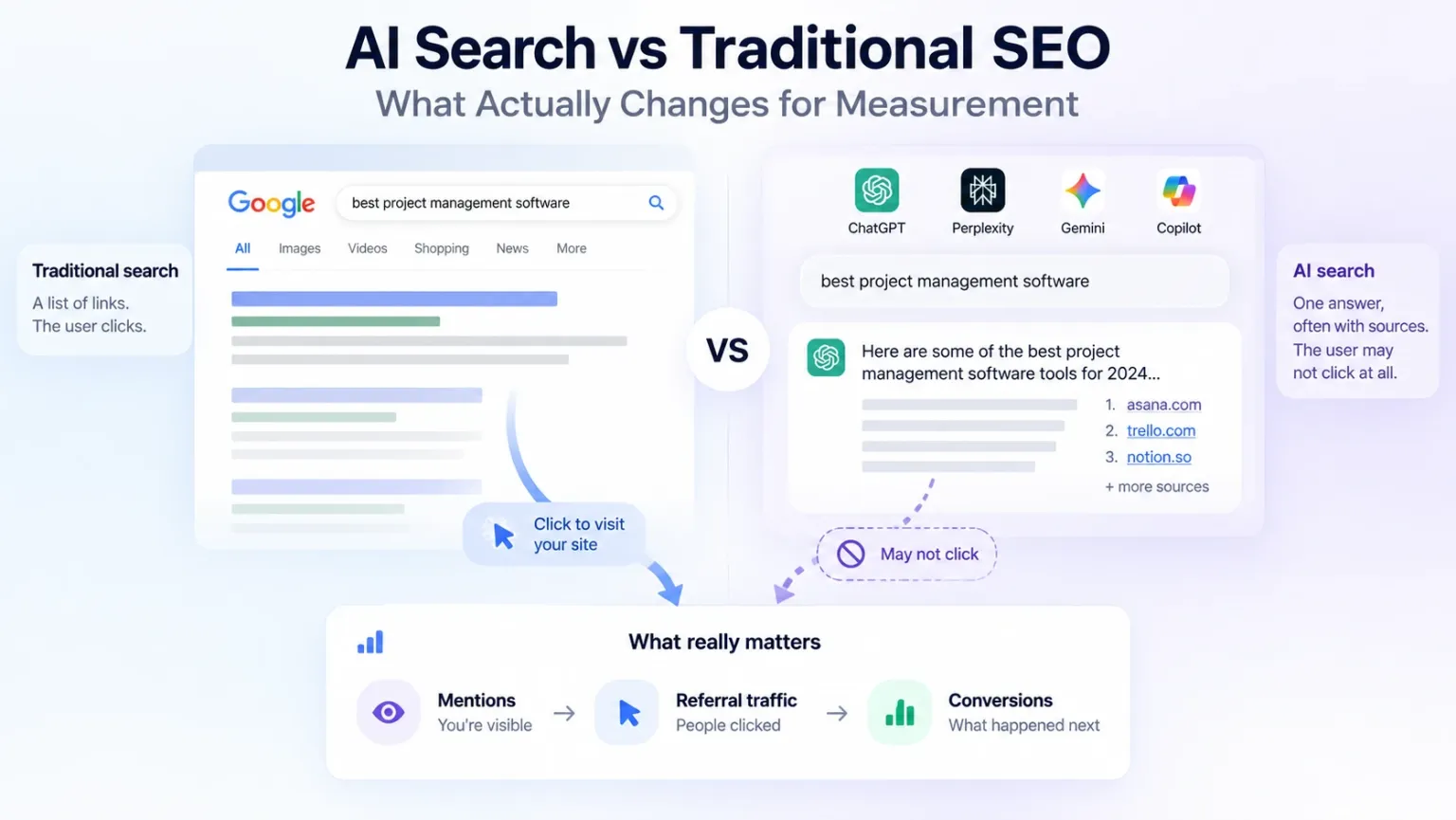
AI Search vs Traditional SEO: What Actually Changes for Measurement
AI search and traditional SEO create different user journeys. Here's what actually changes for measurement, and why visibility alone doesn't tell you if it's working.
What Is AEO & GEO? A Practical Guide
AEO and GEO explained in plain terms, plus the part most guides skip: how to know whether your AEO or GEO work is bringing in anything real.
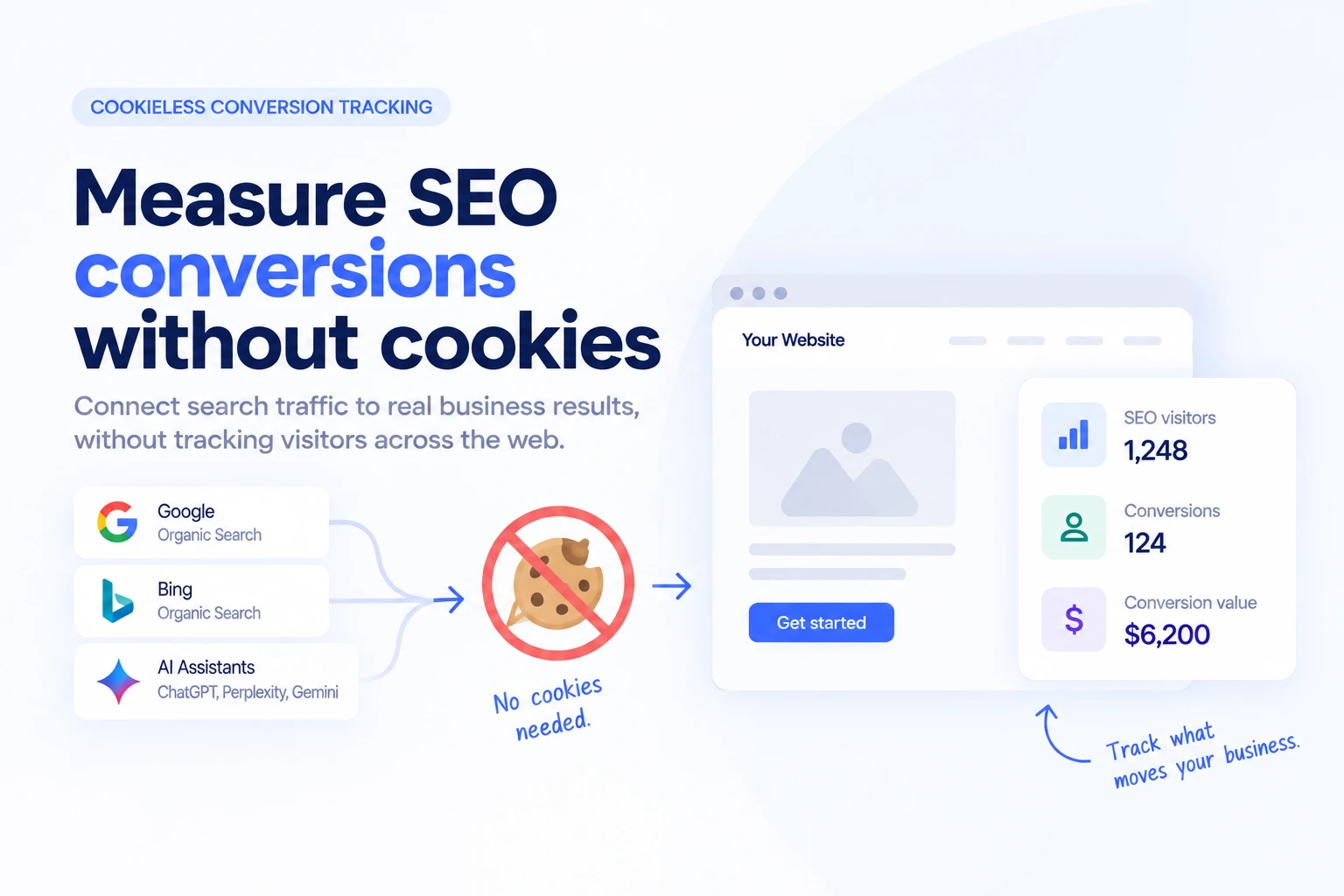
Cookieless Conversion Tracking for SEO: How It Works
Cookies aren't the only way to measure whether search traffic converts. Here's what you can track without them, and where the limits are.
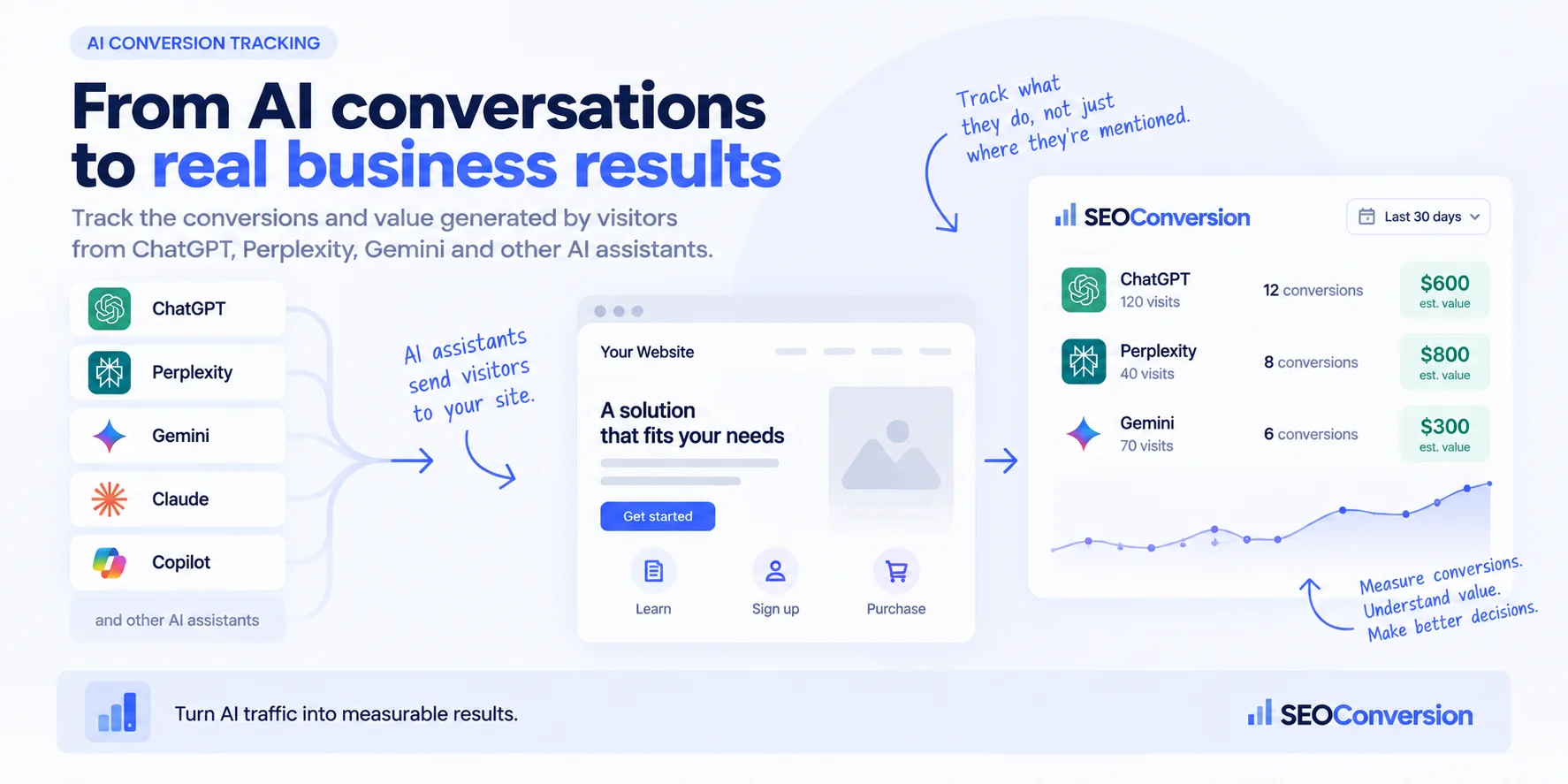
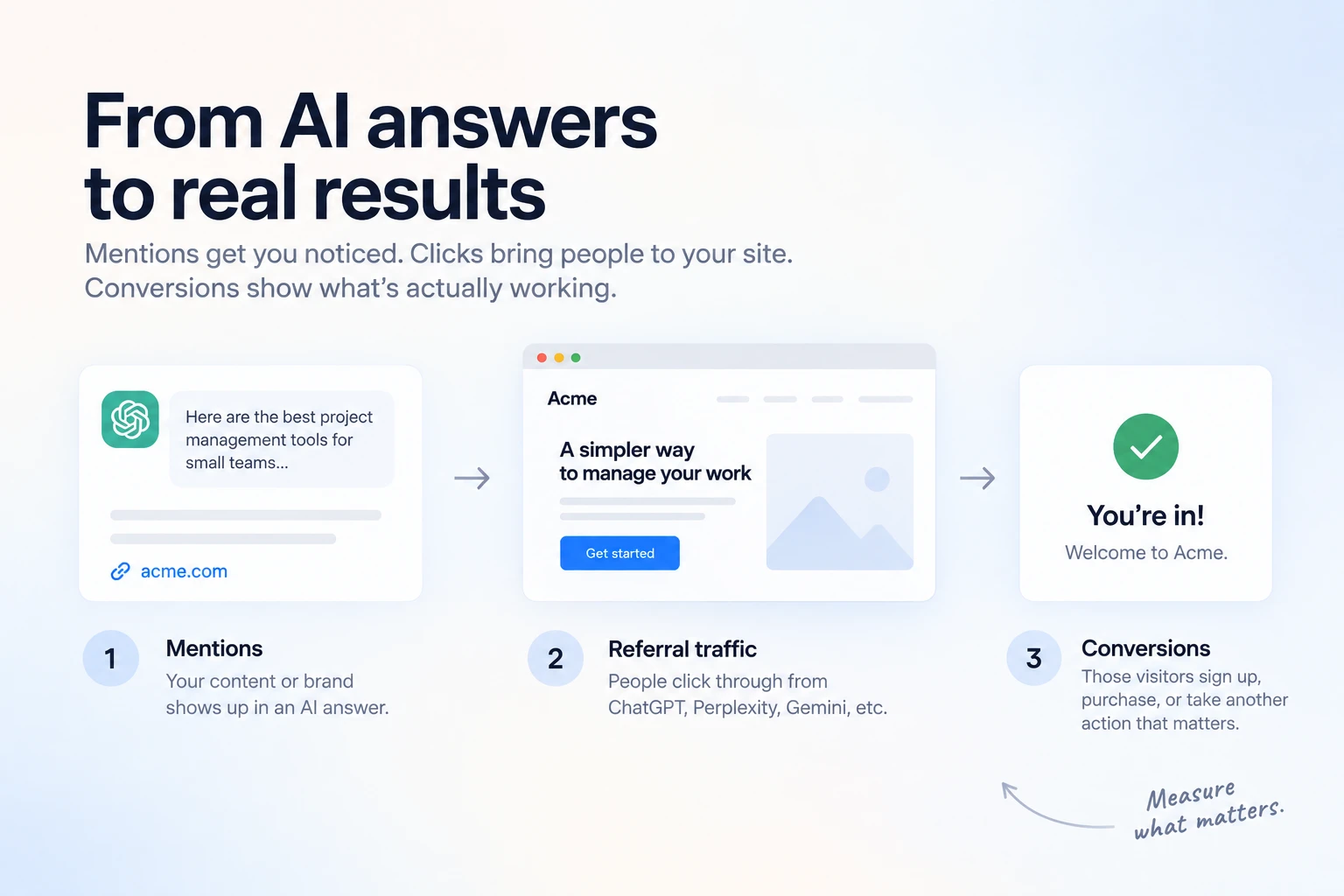
How to Track ChatGPT, Perplexity & Gemini Conversions, Not Just Mentions
Being mentioned in a ChatGPT answer isn't the same as earning a customer. Here's how to track AI referral visits through to conversions and value.
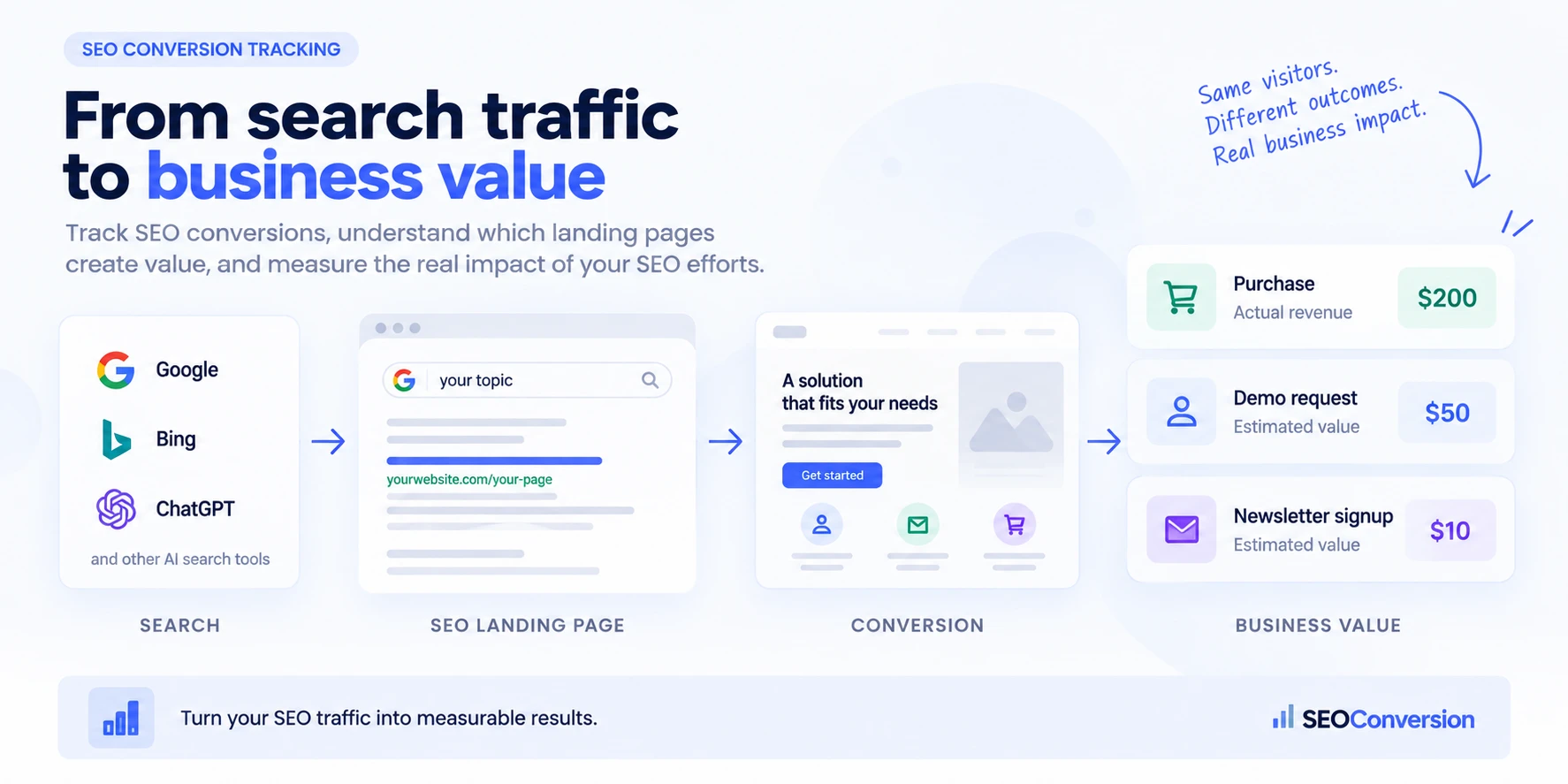
SEO Conversion Tracking: Measure Conversions and Value from Organic Search
Traffic tells you who showed up. Here's the full guide to measuring what organic search actually contributes to the business.
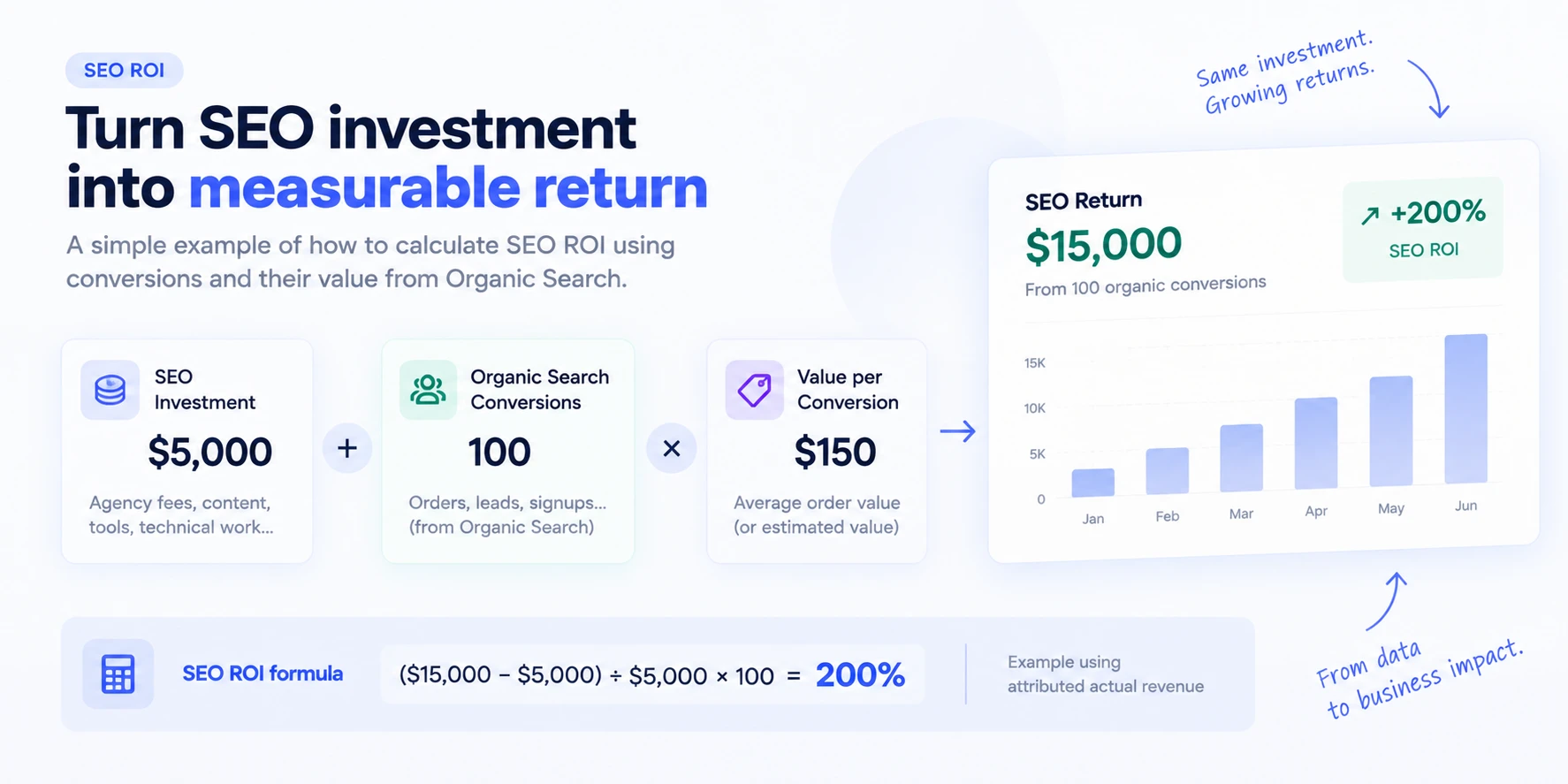
How to Calculate and Present SEO ROI
Rankings and traffic are up, but what's the return on what you're spending on SEO? Here's the formula, and how to present it honestly.
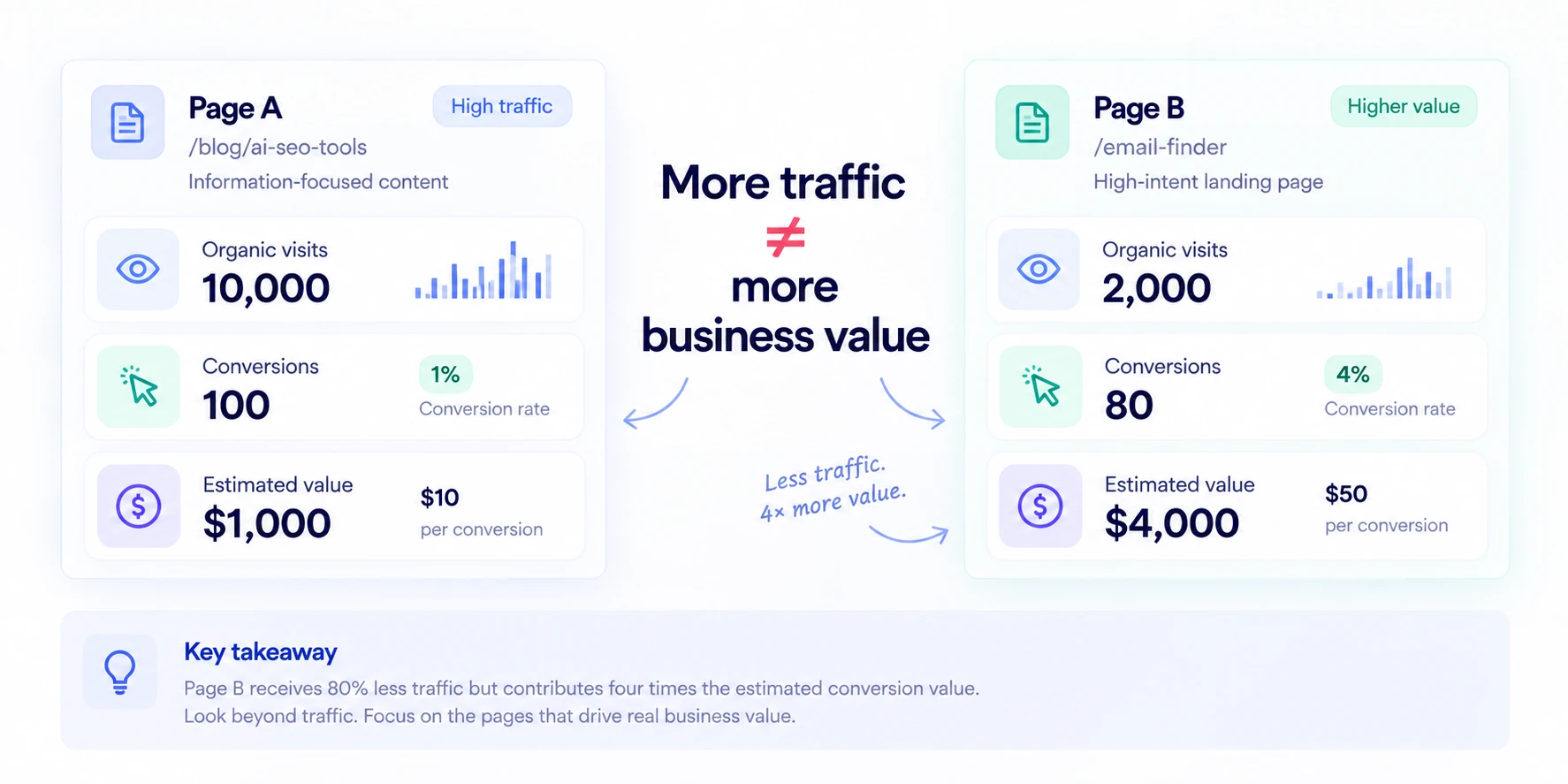
Organic Conversion Attribution: Tie SEO Landing Pages to Business Value
Google Search Console tells you which pages get clicks. Here's how to find out which ones actually drive conversions and business value.
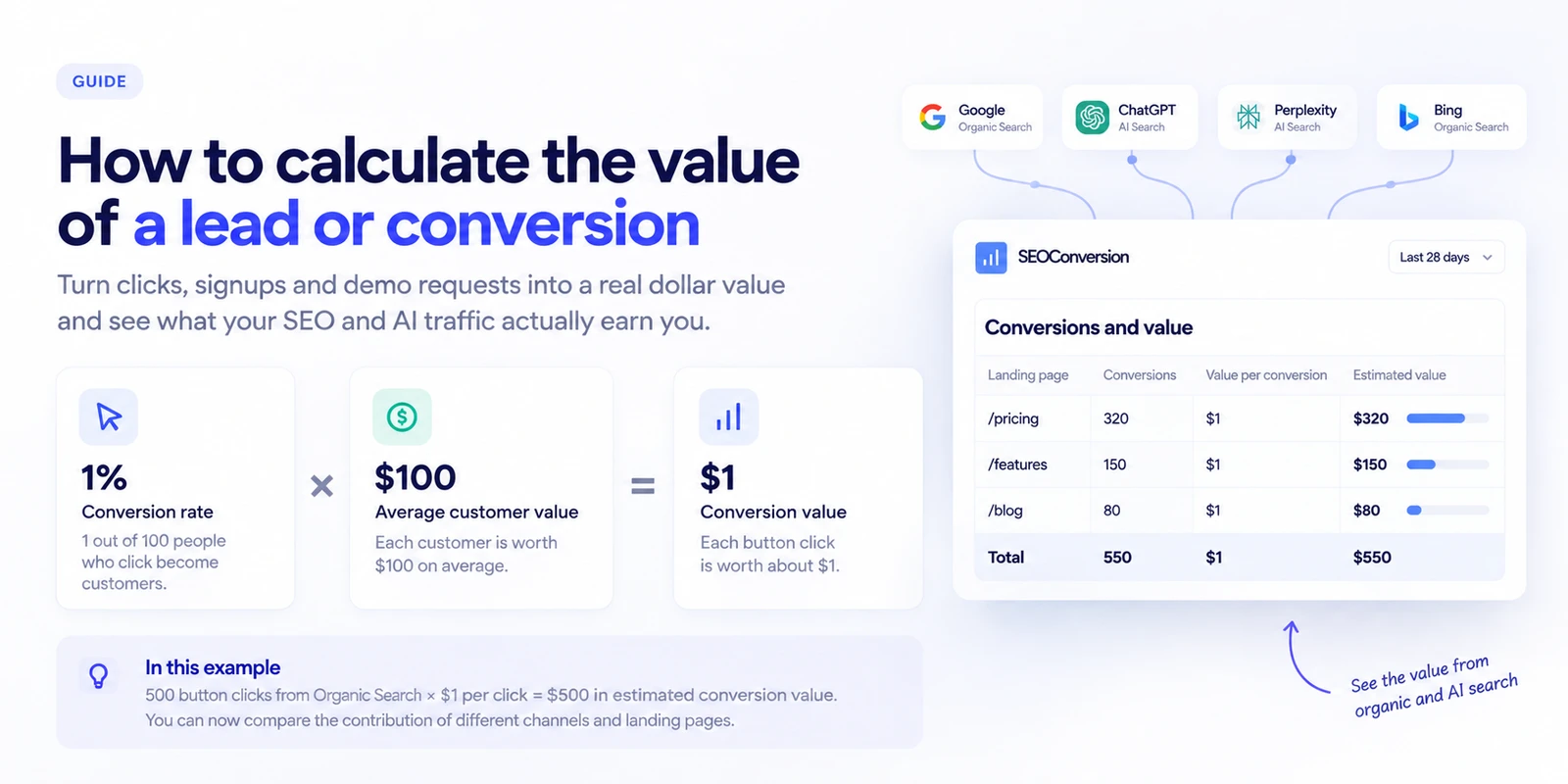
How to Calculate the Value of a Lead or Conversion
Most conversions aren't purchases. Here's the simple formula to turn leads, signups and demo requests into a real dollar value.